
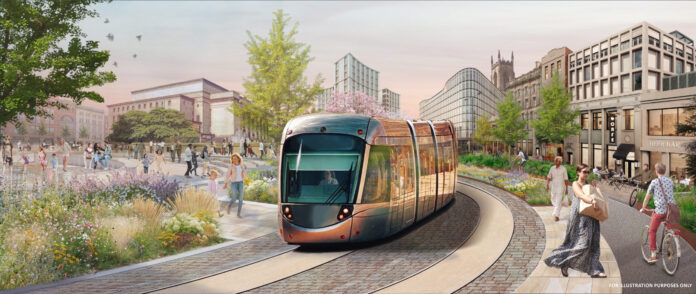
Source: https://www.westyorks-ca.gov.uk/improving-transport/mass-transit/
In my 15 years leading infrastructure and regional development teams, I’ve seen few initiatives as transformative as the mass transit plans now advancing across West Yorkshire and Leeds. This isn’t just about moving people faster—it’s about reshaping how cities grow, attract investment, and function in a more sustainable way. The conversations I’m having with local business leaders, transport authorities, and investors echo one thing: this project could redefine the economic spine of northern England.
Creating an Integrated Regional Transit Network
When I first saw early drafts of West Yorkshire’s transport blueprint, the biggest gap was coordination. Each city had its own agenda. Now, the shift is toward integration—connecting Leeds, Bradford, Wakefield, and Huddersfield through a connected system. The goal isn’t just convenience; it’s economic linkage. I once advised a council where fragmented planning cost five years of growth. This time, collaboration is the foundation, not an afterthought. The current mass transit plans prioritize shared infrastructure, central data platforms, and interoperable ticketing—finally moving transportation in West Yorkshire into the 21st century.
Prioritizing Sustainable Mobility
Sustainability isn’t just a checkbox anymore—it’s the bottom line. Back in 2018, most councils were still talking electric buses as a PR move. Now, they’re realising that sustainability affects long-term revenue and public trust. The mass transit plans in Leeds and West Yorkshire are incorporating low-emission zones, renewable power usage, and multimodal accessibility. From a practical standpoint, every percentage point of emissions reduction can translate into millions in avoided costs over the next decade. The key lesson I’ve learned: sustainability must be engineered into the system, not bolted on at the end.
Stimulating Economic Growth Through Connectivity
I’ve worked with clients who underestimated the business impact of better transit. When a network like this connects labour markets and business districts, productivity lifts organically. Leeds has already seen property demand surge within proposed transit corridors. The data tells us that every pound invested in mass transit yields up to four pounds in regional GDP. This project will boost accessibility, attract talent, and reduce employer friction in recruitment. The smarter firms are already planning office relocations near new transport hubs.
Managing Public and Private Collaboration
Here’s what nobody talks about: infrastructure success often comes down to partnership politics, not engineering. During a project I led in 2019, private-sector stakeholders pulled out after transparency broke down. West Yorkshire’s mass transit vision appears to have learned that lesson. Local leadership is inviting business consortiums to co-invest early, offering predictable returns tied to passenger revenue and land value capture. That’s not theory—it’s a model proven in Copenhagen and Melbourne. If the balance holds, public-private alignment will be the ultimate success factor here.
Preparing for Future Technology Integration
The conversation around transit tech used to be all hype. But real digital transformation is finally feasible. Leeds’ upcoming network incorporates predictive scheduling, AI-assisted traffic management, and dynamic demand routing. What I’ve learned is that you should pilot these technologies in contained corridors before scaling. One city I consulted rushed automation and paid for it in customer trust. The smart move now: blend technology adoption with operational stability—so transit innovation supports reliability, not disrupts it.
Conclusion
The momentum behind mass transit plans across West Yorkshire and Leeds is more than an engineering challenge—it’s a business transformation story. Those of us who’ve managed complex rollouts know that success will hinge on pragmatic leadership, collaborative execution, and staying grounded in long-term public value. The bottom line is: get the fundamentals right, and this could become a national benchmark for connected urban growth.
FAQs
What are the main goals of the mass transit plans in West Yorkshire and Leeds?
The plans aim to improve regional connectivity, reduce congestion, support sustainable transport, and strengthen economic links between key cities including Leeds, Bradford, and Wakefield through a unified transit system.
How will Leeds benefit economically from the new mass transit network?
Leeds is expected to see growth in jobs, property values, and business relocation interest near new transit hubs, with projected regional GDP uplift tied to improved accessibility.
What sustainability measures are included in the mass transit project?
The plans feature low-carbon vehicles, renewable energy integration, and designs promoting active transport modes like cycling and walking to cut regional emissions.
Who is funding the mass transit plans in West Yorkshire?
Funding combines local authority investment, central government grants, and private sector participation through structured partnerships and revenue-sharing models.
When is construction expected to start in Leeds?
Preliminary works are targeted for the late 2020s, following route finalisation, environmental approval, and public consultations expected to conclude within the next 18 months.
How will existing bus and rail services be integrated with the new system?
The design includes shared ticketing networks and coordinated timetables to ensure seamless interchanges between buses, light rail, and heavy rail systems.
What impact will the mass transit plans have on local communities?
Communities across West Yorkshire will gain better access to jobs, education, and healthcare, while reduced car dependency will improve air quality and safety.
How will technology shape the mass transit system in Leeds?
AI-driven scheduling, smart ticketing, and real-time passenger analytics will improve service reliability and allow dynamic route management during peak times.
What lessons from past projects are being applied here?
Leaders are emphasizing transparency, stakeholder engagement, and phased rollouts to avoid the delays and coordination issues seen in earlier national transit projects.
What’s the long-term vision for transit in West Yorkshire?
The vision is a fully integrated, low-carbon, regionally connected transport ecosystem that drives inclusive economic growth and sustainable urban development through 2050.

