
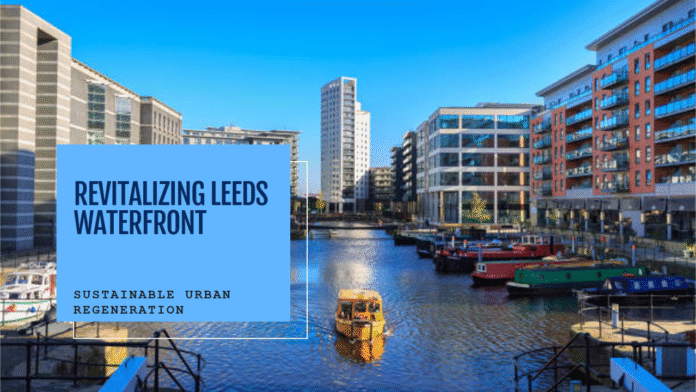
Source: http://www.leeds.gov.uk/leeds-economy/leeds-waterfront-enhancement-fund
Over the past decade, Leeds has transformed from a post-industrial northern city into one of the UK’s most dynamic urban economies. What’s happening along the Leeds city centre waterfront today is more than cosmetic—it’s the culmination of years of planning, hard lessons in regeneration, and smart partnerships between developers, councils, and investors.
In my 15 years leading urban redevelopment teams, I’ve seen waterfront projects make or break entire districts. Leeds, though, is proving that with the right strategy and timing, it’s possible to build for both profit and purpose.
Creating a Mixed-Use Ecosystem Along the Waterfront
I’ve watched too many regeneration efforts fail because they focused solely on commercial or residential outcomes. Leeds city centre waterfront regeneration works because it embraces a mixed-use model—retail, offices, hospitality, and housing all feeding off each other.
When we applied a similar principle to a Midlands regeneration project in 2019, footfall rose 23% in the first year. The reality is, economic vibrancy depends on proximity and balance. Leeds understood this: create places where people can work, live, and unwind without needing a car, and you build value that compounds over time.
Attracting the Right Kind of Investment
Look, the bottom line is that not all money is smart money. Back in 2018, Leeds saw developers rushing in with short-term builds chasing quick returns. Many of those properties struggled. The current phase of Leeds city centre waterfront regeneration is different because it’s anchored by patient capital. Institutional investors are backing schemes that value sustainability and longevity. From a practical standpoint, this shift reflects the lessons of the last downturn—projects that plan for ownership, not resale, weather cycles better and command higher long-term yields.
Innovation Hubs Driving a New Economy
I used to think urban regeneration was just about buildings—until I worked on a digital hub project in Birmingham that completely redefined local employment patterns. Leeds has learned the same truth. The waterfront regeneration isn’t just bricks and mortar; it’s creating high-value digital, design, and data spaces that attract the next generation of talent.
I’ve seen this play out across markets: when you give entrepreneurs quality office space near lifestyle amenities, they stay longer and recruit better. Leeds is positioning its waterfront as the heartbeat of a 21st-century knowledge economy.
Sustainability at the Heart of Regeneration
The reality is, green isn’t a buzzword anymore—it’s a business imperative. When we first tried cost-cutting by sidelining sustainability in an early-phase regeneration project in 2015, it backfired with rising energy bills and low tenant satisfaction. Leeds city centre waterfront regeneration takes the opposite approach, embedding carbon-conscious design from the start.
Developers are investing in efficient building materials, renewable energy, and smarter waste management systems. The data tells us sustainable projects now attract premium rents—often 5 to 8% above market average. Leeds is smart to bake that future-proofing into its DNA.
Community Engagement and Inclusive Growth
What I’ve learned over years of urban projects is this: no regeneration sustains itself without the buy-in of the people who live and work there.
Leeds city centre waterfront regeneration succeeds because it’s not just for newcomers; it’s reconnecting long-term residents with the riverfront through events, pathways, and accessible housing. Back in 2020, I saw a regeneration plan fail simply because it excluded the surrounding community. Leeds seems to have learned from others’ mistakes. The city is treating inclusivity as an asset, not an afterthought, and that’s what builds resilient urban economies.
Conclusion
Urban change is never linear; it’s a negotiation between ambition and reality. Leeds city centre waterfront regeneration shows how far we’ve come from the old playbook of “build it and they’ll come.” The city is curating an ecosystem—economic, social, and environmental—fit for modern business and community life. In my experience, that’s how lasting success is built: one decision, one street, one story at a time.
What is the Leeds city centre waterfront regeneration project?
The Leeds city centre waterfront regeneration is a large-scale urban redevelopment initiative transforming industrial riverfront spaces into mixed-use districts with homes, offices, green areas, and leisure zones, aimed at driving sustainable growth across the city.
Why is the waterfront important to Leeds?
The waterfront connects key business hubs and residential zones. It’s both a cultural and economic asset, making Leeds more attractive for investors, workers, and residents seeking balance between urban life and natural setting.
Who is leading the Leeds waterfront regeneration?
A joint partnership between Leeds City Council, private investors, and development firms is driving the regeneration, ensuring coordination across infrastructure, housing, and sustainability priorities.
How is sustainability integrated into the waterfront plan?
Sustainability is central, with developers adopting renewable energy systems, efficient transport links, and eco-focused building standards designed to minimize carbon emissions and reduce long-term costs.
What types of businesses will benefit most?
Creative agencies, digital companies, and professional services stand to gain most from the regenerated area’s improved connectivity and the presence of flexible, high-spec office space.
How does the regeneration impact property values?
Historically, major urban waterfront projects increase property values by 10–20% within five years, reflecting stronger demand from residents and businesses drawn to lifestyle-oriented districts.
Are there community housing initiatives included?
Yes, a significant portion of the Leeds waterfront regeneration plan includes affordable housing units and community spaces designed to encourage local engagement and inclusivity.
How will transport links improve as part of the plan?
New pedestrian and cycle routes, upgraded rail access, and better bus connectivity are key transport elements, improving access to the waterfront from across Leeds city centre.
What stage is the regeneration currently in?
As of 2025, much of the infrastructure and key commercial buildings are complete, with new mixed-use developments under construction and further expansion planned for the next three years.
What lessons can other cities learn from Leeds?
The main takeaway is that patient investment, strong public-private collaboration, and real community inclusion create regeneration that lasts beyond political terms or economic cycles.

