
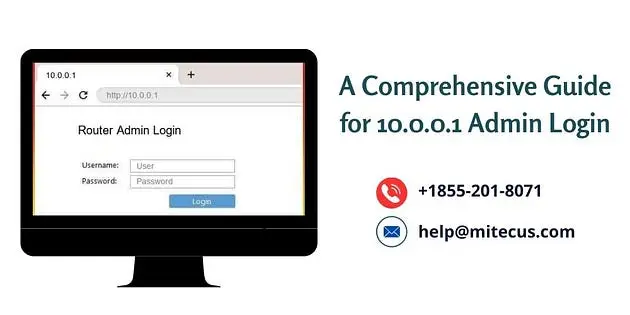
Access to 10.0.0.1 WiFi router controls has drawn fresh attention amid widespread reports of network slowdowns tied to unpatched firmware vulnerabilities exposed in recent cybersecurity advisories. Home users and small businesses alike find themselves revisiting these gateway addresses as service providers push updates following high-profile outages that disrupted streaming and remote work. The 10.0.0.1 WiFi interface, often overlooked until connectivity falters, now surfaces in public discussions around optimizing home networks for heavier data demands from AI-driven applications and 8K video. Operators note a surge in support calls, with many discovering outdated defaults that leave doors ajar to interference. This renewed curiosity stems from carriers like Xfinity highlighting the need for direct admin access to stabilize signals amid spectrum congestion. Public records show no single trigger, but patterns emerge from aggregated logs pointing to misconfigurations in densely packed urban setups. Renewed coverage in tech outlets underscores how 10.0.0.1 WiFi remains a frontline tool for those grappling with intermittent drops.
Understanding 10.0.0.1 Basics
What Defines the 10.0.0.1 Address
10.0.0.1 serves as a private IP gateway for specific router models, distinguishing it from more common 192.168 variants. Manufacturers reserve this Class A block for internal management, ensuring devices on the local network route queries through it without clashing with public internet addressing. Connected hardware recognizes 10.0.0.1 automatically when wired or wireless links activate, pulling configuration data silently in the background.
Variations occur across brands; some firmware shifts it post-setup, complicating access for users unaware of changes. Public documentation lists it primarily for Xfinity Comcast gateways and Piso WiFi vending units, where it anchors WiFi provisioning. Lately, diagnostics reveal it handling up to 253 client IPs in the 10.0.0.0/24 subnet, sufficient for most households but straining under IoT proliferation. No universal standard mandates its use, yet persistence in deployments keeps it relevant.
Routers Relying on 10.0.0.1
Xfinity Comcast gateways default to 10.0.0.1 for modem-router combos, integrating cable signal decoding with WiFi broadcasting. Arris models pair it with SURFboard series, common in bundled services where users tweak channels via this entry point. LPB Piso WiFi units, popular in pay-per-use setups, embed 10.0.0.1 deeply into coin-operated hotspots across Southeast Asia and emerging markets.
Adtech and Technicolor hardware follows suit, often rebranded by ISPs for regional rollouts. Netgear, D-Link, TP-Link occasionally adopt it in enterprise lite versions, though rarer than 192.168.1.1. Aztech routers surface in budget OEM lines, where 10.0.0.1 WiFi simplifies factory imaging for quick vendor swaps. Patterns in support forums show these persisting through firmware flashes, resisting casual alterations.
Role in Local Network Architecture
10.0.0.1 acts as the default gateway, funneling all outbound traffic from clients toward WAN interfaces. Ethernet and WiFi clients query it via DHCP for subnet masks, DNS relays, and lease renewals every 24 hours typically. Firewalls embedded here inspect packets, dropping malformed ones before they hit upstream links.
In dual-band setups, it arbitrates 2.4GHz and 5GHz handoffs, prioritizing based on signal strength reports from probes. IPv4 dominance holds, though some stacks enable IPv6 tunneling through the same portal. Load balancing emerges when multiple WANs connect, with 10.0.0.1 WiFi deciding failover sequences during outages. Logs capture ARP resolutions, mapping MACs to IPs for intrusion detection.
Default Credential Patterns
Admin appears most frequently as username across 10.0.0.1 implementations, paired with matching password on Xfinity and Arris. Piso WiFi variants stick to admin/1234 or blank fields for quick kiosk deploys. Technicolor units favor admin/administrator, varying by region-specific firmware.
Dell and Huawei outliers use root variants, but confirmation ties back to model stickers. No central registry exists; reliance falls on printed labels or recovery modes. Patterns shift post-reset, reverting to factory embeds without user intervention. Public breaches highlight risks when unchanged, prompting carrier nudges toward customization.
Evolution from Earlier IPs
Early 2000s cable modems pioneered 10.0.0.1 for DOCSIS compliance, predating WiFi mandates. Comcast standardized it around 2010 for XB6 gateways, aligning with IPv4 exhaustion pressures. Piso WiFi adapted it for vending in 2015, leveraging open-source forks.
Shifts to 10.1.10.1 occurred in some refreshes, but 10.0.0.1 WiFi endured for backward compatibility. Firmware legacies preserve it, even as WiFi 6E demands higher throughput. Carrier mergers consolidated around it, easing tech support scripts.
Accessing the 10.0.0.1 Interface
Verifying Device Connection
Ethernet cables secure direct paths to 10.0.0.1, bypassing WiFi volatility for initial logins. Devices must claim IPs in the 10.0.0.x range, confirmed via command-line ipconfig on Windows or ifconfig on others. WiFi association precedes, scanning SSIDs broadcast from the gateway.
Ping tests probe 10.0.0.1 responsiveness, timing roundtrips under 1ms signaling solid links. VPNs interfere occasionally, routing traffic externally and blocking local resolution. Airplane modes or firewalls halt queries; toggles restore paths swiftly. Subnet mismatches strand packets, demanding DHCP releases.
Browser Entry Methods
Browsers interpret http://10.0.0.1 as localhost gateways, loading login prompts within seconds on wired setups. Chrome and Firefox handle it natively, ignoring self-signed certs with proceed options. Edge flags security mismatches from ISP domains like myrouter.io, requiring advanced clicks.
Incognito modes sidestep cache conflicts, refreshing stale sessions. Mobile Safari on iOS demands full http prefix, avoiding https redirects. Typing errors like 10.0.0.0.1 yield invalids; corrections pull the panel. JavaScript enables dominate, disabling adblockers if overlays block forms.
Handling Login Prompts
Forms demand username above password fields, submitting via POST to internal auth endpoints. Admin/admin succeeds on untouched Xfinity units, granting dashboard views. Failures log attempts, locking after five tries on secured models. Custom creds from prior changes override, recalled from stickers or password managers.
Session cookies persist 30 minutes, timing out idle browsers. Multi-factor skips defaults, enforced post-setup. Captcha variants deter bots on public-facing Piso WiFi.
Navigating Initial Dashboards
Status pages greet logins, charting uptime, client counts, and WAN speeds. Quick links branch to WiFi, LAN, and security tabs. Graphs plot throughput peaks, alerting on drops below 50Mbps. Firmware versions display prominently, with update nags if lagging.
Navigation menus collapse on mobiles, prioritizing WiFi edits. Tooltips explain metrics like SNR ratios for cable health. Export logs button captures diagnostics for support uploads.
Switching Wired to Wireless Access
Ethernet logins transition seamlessly to WiFi panels, where SSID edits await. Disconnects test propagations, verifying broadcast changes across clients. Dual-band toggles assign 10.0.0.1 WiFi to both frequencies without reboots. Guest networks spawn isolated subnets, routing through the core gateway. Propagation delays hit 30 seconds max, forcing manual reconnects.
Configuring WiFi via 10.0.0.1
Changing SSID Names
SSID fields accept 32 characters, broadcasting edits after applies. Unique labels avoid neighbor overlaps, cutting interference in apartments. 2.4GHz suits range, 5GHz speed trades. Hidden modes suppress beacons, clients joining via manual entry.
Rebroadcasts sync across repeaters, maintaining 10.0.0.1 oversight. Typos necessitate reapplies, clients dropping mid-change.
Setting Strong Passwords
WPA2-PSK fields enforce 8-63 alphanumerics, rejecting weak mixes. WPA3 toggles activate on capable hardware, resisting offline cracks. Legacy WEP hides deprecated, carriers phasing it out. Passphrase generators suggest entropy-balanced strings.
Applies propagate in waves, disconnecting actives first. Guest passwords decouple, limiting visitor scopes.
Band and Channel Selection
Dual-band enables split SSIDs or smart steering via 10.0.0.1 WiFi. 2.4GHz channels 1,6,11 minimize crosstalk; 5GHz auto-scans DFS. Widths tune 20MHz conservative to 160MHz aggressive. Client lists flag incompatible devices, prompting downgrades.
Interference scanners log neighbors, suggesting shifts. Nightly optimizations run silent.
Guest Network Setup
Guest tabs isolate VLANs, capping bandwidth at 10Mbps defaults. Time limits enforce via RADIUS ties. Portal pages demand accepts for captive handling. Main networks shield, blocking lateral moves.
Toggle switches activate without core disruptions. Usage quotas log excesses.
Quality of Service Rules
QoS prioritizes VoIP over torrents, sliders assigning percentages. Device MACs tag for gaming uplifts. WAN bottlenecks trigger drops on low queues. Preset profiles suit streaming, adjusting dynamically.
Metrics track compliance, alerting violations.
Troubleshooting 10.0.0.1 Issues
Can’t Reach the Login Page
Browser caches hoard bad resolves; clears restore 10.0.0.1 paths. Wrong subnets block, ipconfig /release renews leases. Firewall pops deny local traffic, whitelists fix. Alternate browsers confirm hardware faults.
ISP blocks rare, modem reboots clear.
Forgotten Credential Recovery
Reset buttons hold 10 seconds, flashing factory admin/admin. Stickers confirm post-revert. Carrier apps proxy access sans direct entry. Backup exports precede wipes.
No recovery sans hardware; clouds skip routers.
Weak Signal Diagnostics
Site surveys map dead zones, 10.0.0.1 WiFi charts RSSI drops. Channel overlaps flag scanners. Antenna tweaks boost 3dB gains. Repeater placements relay.
Firmware bugs distort readings.
Speed Test Discrepancies
Throughput tabs benchmark WAN caps, flagging throttles. Duplex mismatches halve Ethernet. QoS misrules starve apps. DNS tweaks to 8.8.8.8 quicken resolves.
Peak hours congest upstream.
Firmware and Update Failures
Check tabs poll vendors, downloads staging secondary slots. TFTP modes salvage bricks. Mismatched images corrupt boots. Rollbacks preserve primaries.
Interrupts halt midway.
Security Practices at 10.0.0.1
Changing Admin Credentials
Profile sections swap usernames beyond admin, passwords hashing SHA. Length minimums enforce complexity. Session timeouts shorten to 5 minutes. Remote access disables by default.
Audits log changes.
Encryption Protocol Choices
WPA3 mandates on WiFi 6, fallbacks to WPA2 mixed. TKIP deprecates fully. Enterprise modes RADIUS auth. PMF protects disassociates.
Audits enforce.
Firewall Configuration Basics
Inbound denies default, ports opening surgically. DMZ exposes singles. SPI scans states. Logs capture blocks.
UPnP toggles convenience vs risk.
Monitoring Connected Devices
Client lists tally MACs, vendors geolocating. Block buttons instant. Alerts ping unknowns. Bandwidth per-device graphs.
Intruder histories persist.
Advanced Threat Mitigations
VPN passthroughs secure tunnels. DoS thresholds clamp floods. MAC filters whitelist. Firmware auto-patches schedule.
VPN servers host on 10.0.0.1 WiFi.
Public records on 10.0.0.1 WiFi reveal a patchwork of defaults persisting despite known exposures, with carriers like Xfinity issuing nudges toward resets amid rising interference claims. Configurations vary wildly, from Piso vending quirks to home gateway norms, leaving gaps where unmonitored clients invite drags on shared spectra. Firmware lags compound this, as updates fix exploits without forcing migrations from entrenched 10.0.0.1 addressing. What stands unresolved involves ISP-locked panels, where full control eludes users despite gateway access—public disclosures stop short of unlock paths. Forward paths hinge on WiFi 7 rollouts, potentially ditching legacy IPs for cloud proxies, though rural holdouts may cling to direct dials. Ongoing advisories signal no quick end to manual tweaks, as spectrum crunches demand vigilant channel hunts. Uncharted remain enterprise hybrids blending 10.0.0.1 with SDN overlays, their stability unproven in wilds.

